Supply Chain & Logistics
Logistics software that knows where every order, pallet and vehicle actually is
We engineer supply chain software for distributors, carriers, manufacturers and retailers who have outgrown spreadsheets and disconnected tools. Our systems connect warehouses, fleets, suppliers and customers through dependable data flows, so decisions rest on what is happening now rather than on yesterday’s report.
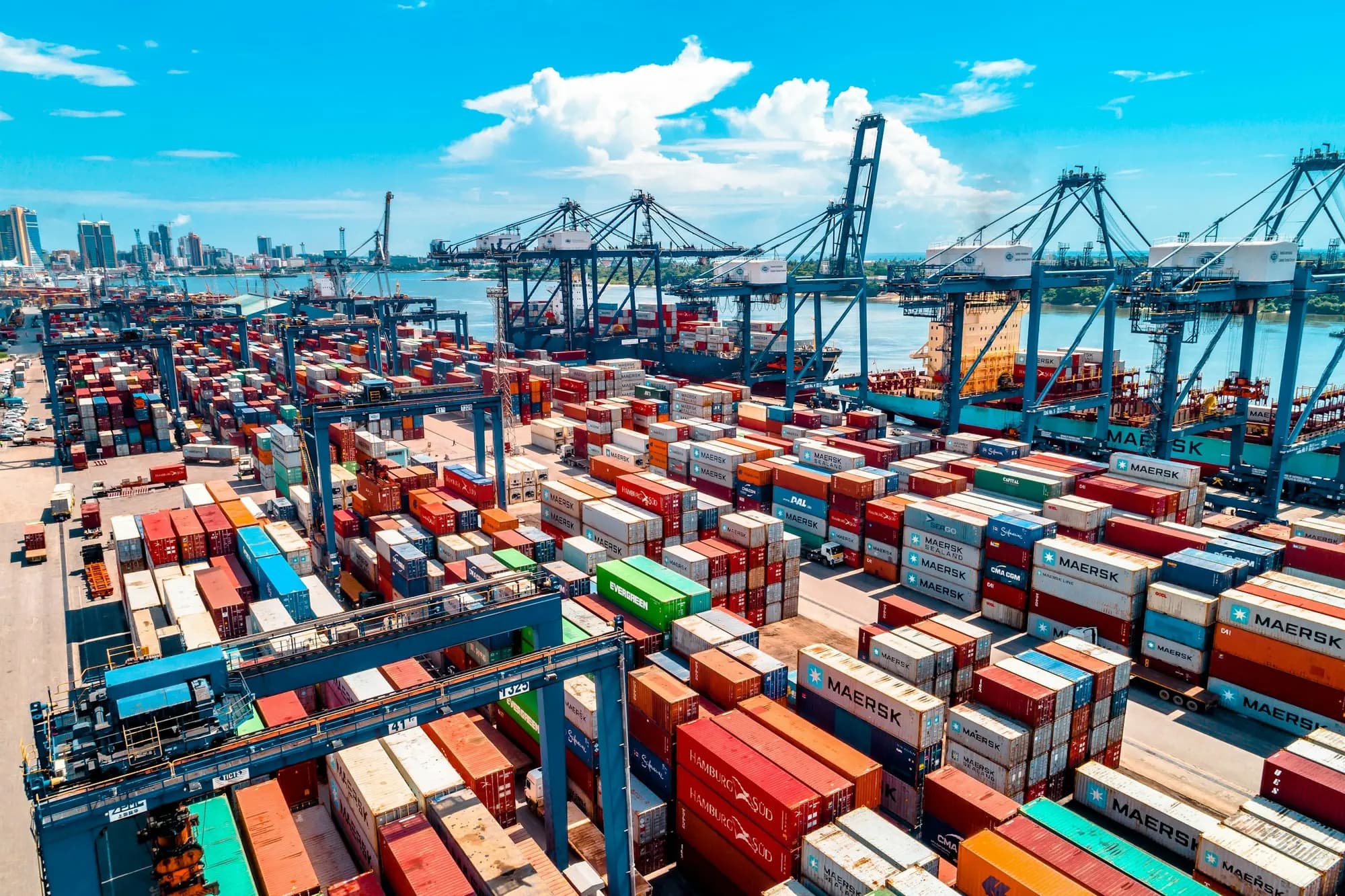
Supply Chain & Logistics
The challenge
When goods move faster than information
In many supply chains, the physical flow of goods is well understood while the information flow is not. Stock levels live in one tool, dispatch plans in another, and proof of delivery arrives on paper days later. Each hand-off between a supplier, a warehouse and a driver becomes a blind spot where delays and losses go unnoticed.
These gaps are sharper in markets such as the DRC and across Central Africa, where operations span distant sites, road conditions change quickly, connectivity is intermittent and supplier networks are fragmented. Software for these environments must work offline, reconcile data once a connection returns and tolerate the realities of the field.
- Inventory figures that differ between the warehouse floor, the sales team and the finance ledger
- Dispatch planned by phone and messaging apps, with no record of who carries what
- Customers calling to ask where their order is because nobody can answer with certainty
- Supplier lead times and purchase confirmations tracked by email rather than in a system
- Fuel, mileage and vehicle maintenance costs that cannot be traced to individual routes
Capabilities
What we design and build in this domain.
Transportation management (TMS)
Plan loads, assign carriers and vehicles, manage freight costs and follow each shipment through pickup, transit and delivery.
Warehouse management (WMS)
Receiving, put-away, picking, packing and cycle counts with barcode or QR scanning, bin locations and multi-warehouse support.
Inventory visibility
A single, reconciled view of stock across depots, stores and vehicles, including reserved, in-transit and damaged quantities.
Fleet management
Vehicle and driver records, GPS telemetry, maintenance schedules, fuel logs and utilisation reporting for owned or contracted fleets.
Route optimization
Delivery sequences that account for time windows, vehicle capacity, priorities and local road constraints, with manual override for dispatchers.
Delivery orchestration
Last-mile workflows for drivers and riders: assignment, offline-capable mobile apps, electronic proof of delivery and exception handling.
Order tracking
Status updates for customers and internal teams through web portals, SMS or messaging notifications, driven by real operational events.
Supplier integrations and logistics APIs
Connections to supplier systems, carriers, marketplaces and ERPs through documented APIs, EDI-style file exchange or webhooks.
Operational analytics
Dashboards on fill rates, delivery lead times, route costs and stock rotation, built on clean event data rather than manual exports.
Example use cases
Illustrative examples of how these capabilities can be applied.
- 01 · Regional distributors
Multi-depot distribution
A distributor supplying shops across several provinces could consolidate depot inventories, plan replenishment from actual sell-through and dispatch trucks from a shared planning board.
- 02 · Retailers and delivery operators
Last-mile delivery for urban commerce
A retailer delivering in a dense city could assign orders to riders automatically, sequence their stops and capture photo or signature proof of delivery, even where mobile data is unreliable.
- 03 · Manufacturers and importers
Inbound supplier coordination
An importer could track purchase orders from confirmation through customs clearance to warehouse receipt, with suppliers updating shipment status through a portal or API.
- 04 · Pharmaceutical and food distributors
Cold chain and regulated goods
A pharmaceutical wholesaler could record batch numbers and expiry dates at every movement, enforce first-expired-first-out picking and trace any lot to the customers who received it.
Technical approach
How we engineer logistics platforms
Logistics software succeeds or fails on the warehouse floor and in the driver’s cab. We start from the physical process and build software that fits it, then make it observable and dependable.
- 01
Map the physical flow
We walk through receiving, storage, dispatch and delivery with your teams to model events, hand-offs and exceptions before designing any screen.
- 02
Design an event-driven core
Every scan, status change and GPS ping becomes an event. This gives a reliable audit trail and lets tracking, analytics and integrations react in near real time.
- 03
Build for the field
Mobile apps work offline, sync safely when connectivity returns and are tested on the devices and networks your drivers and warehouse staff actually use.
- 04
Integrate, then measure
We connect ERP, accounting, carrier and supplier systems through versioned APIs, then instrument the platform so operational metrics are trustworthy from launch.
Technologies & practices
- Event streaming
- PostgreSQL
- Geospatial queries (PostGIS)
- Offline-first mobile sync
- REST and webhook APIs
- OpenAPI
- Barcode and QR scanning
- Containerised services
Security & scalability
Reliability, security and scale
A logistics platform becomes operational infrastructure. When it stops, trucks stop, so availability, data integrity and access control are designed in from the first sprint.
Role-based access by site and function
Warehouse operators, dispatchers, drivers, suppliers and managers see only the sites, orders and actions relevant to their role.
Conflict-safe offline synchronisation
Data captured offline is queued, timestamped and merged with clear conflict rules, so no scan or delivery confirmation is silently lost.
Immutable movement history
Stock movements and delivery events are recorded append-only, providing a traceable chain of custody for audits and disputes.
Secured partner integrations
Supplier and carrier APIs use scoped credentials, rate limiting and request signing, with every external call logged.
Capacity for peak periods
Stateless services and queue-based processing absorb seasonal volume spikes without degrading tracking or dispatch.
Frequently asked questions
Should we build custom logistics software or adopt an off-the-shelf TMS or WMS?
Packaged tools work well for standard processes. Custom development makes sense when your operations involve local constraints, multiple business lines or integrations that packaged tools handle poorly. We often combine both: an existing product for commodity functions and custom services where your processes create an advantage.
Can your supply chain software work with limited or intermittent connectivity?
Yes. We design mobile and warehouse applications to operate offline, store transactions locally and synchronise when a connection is available, with conflict handling that preserves data integrity.
Can you integrate with our existing ERP or accounting system?
In most cases, yes. We integrate through the system’s APIs where they exist, or through database connectors and scheduled file exchange where they do not, and we document every interface we build.
How long does a first release typically take?
It depends on scope and integrations. We usually recommend a focused first release, such as warehouse operations or delivery tracking for one site, followed by incremental rollout, so value arrives early and the design is validated in real operations.
Related solutions
ERP & Business Systems
Custom ERP and business systems that connect procurement, inventory, finance and HR into one controlled, auditable flow.
Learn moreAI, Data & Automation
Data integration, business intelligence, workflow automation and practical AI, designed with governance and human oversight.
Learn moreCommerce & Retail
E-commerce, point of sale, digital ordering and merchant tools that share one catalogue, one stock position and one view of sales.
Learn more

Gombe, Kinshasa, DR CongoPhoto: MONUSCO/Abel Kavanagh — CC BY-SA 2.0
Contact
Let’s discuss your project.
Tell us about your context and constraints — we’ll share how we would approach it.