Commerce & Retail
Sell in store, online and on mobile from a single source of products, stock and orders
Customers move freely between a shop counter, a website, a social channel and a delivery app. We build commerce platforms that let merchants follow them, with point-of-sale, online ordering and back-office tools that run on the same data. It is the discipline we also apply to Gwavo, our own commerce ecosystem.
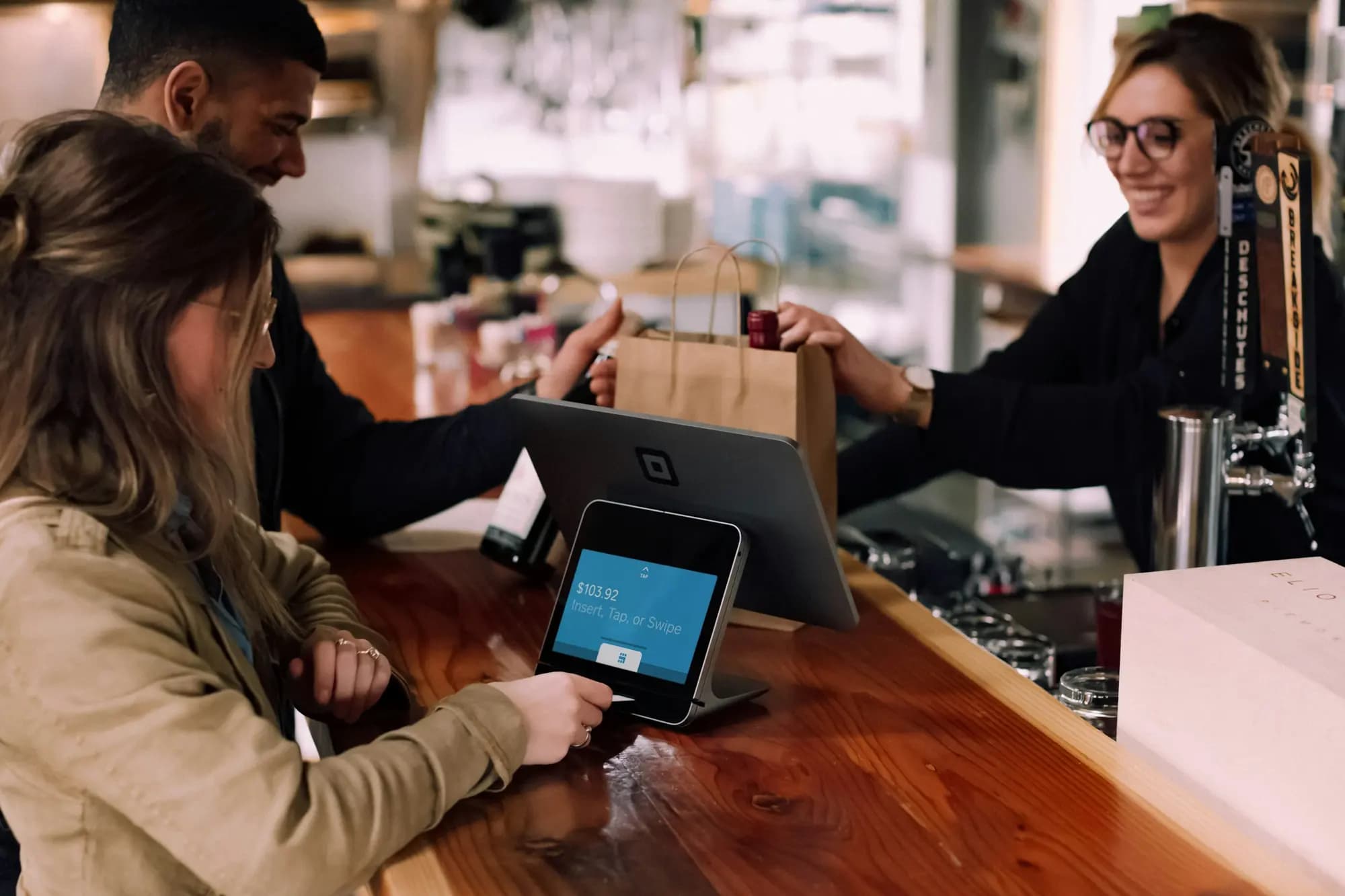
Commerce & Retail
The challenge
Every new channel adds another silo
Many retailers grew channel by channel: a till system first, then a website, then orders taken over WhatsApp or through a delivery partner. Each channel keeps its own prices, stock and customer list. The result is overselling, inconsistent promotions and a manager who learns the day’s real sales only after closing.
Retail in the DRC and across African markets also has its own operating realities. Cash and mobile money coexist with cards, prices may be displayed in dollars and settled in francs, power and internet can drop mid-shift, and much ordering happens through messaging rather than websites. Commerce software must keep selling through all of this.
- Stock levels that differ between the shop, the website and the warehouse
- Orders taken on WhatsApp or by phone and copied manually into the till
- Point-of-sale terminals that stop working when the internet connection drops
- Daily cash, card and mobile money totals reconciled by hand at closing
- No reliable view of which products, stores or channels actually make money
Capabilities
What we design and build in this domain.
Commerce platforms
A shared commerce core for catalogue, pricing, promotions, customers and orders that every channel draws from.
E-commerce
Fast, mobile-first online stores with search, checkout, delivery options and content management your team can run without developers.
Point-of-sale systems
Offline-capable POS for tablets and terminals with barcode scanning, receipts, returns, cashier shifts and cash drawer control.
Digital ordering
Ordering by web, app, QR code or messaging, with order status updates and pickup or delivery options for each location.
Merchant management
Back-office tools for products, suppliers, staff, opening hours and permissions, whether you run one shop or a network of franchises.
Store operations
Stock counts, transfers, receiving, price changes and daily closing procedures standardised across every store.
Omnichannel commerce
Click-and-collect, ship-from-store and unified returns, with real-time stock reservation across channels to prevent overselling.
Payment integrations
Card terminals, mobile money and payment gateways integrated at the till and online, with automatic settlement reconciliation.
Retail analytics
Sales by product, store, channel and hour, margin analysis and basket insights that inform buying and merchandising decisions.
Example use cases
Illustrative examples of how these capabilities can be applied.
- 01 · Multi-store retailers
Supermarket or pharmacy chain
A chain of stores could run offline-capable tills in every branch, centralise pricing and promotions, and see consolidated sales and stock across all locations each evening.
- 02 · Restaurants and food businesses
Restaurant ordering and delivery
A restaurant group could take orders from its own app, QR menus at the table and messaging, send them to the kitchen, and dispatch deliveries to its riders.
- 03 · Brands and wholesalers
Wholesale ordering portal
A wholesaler could let shopkeepers reorder from a mobile portal with negotiated prices and credit terms, instead of relying on calls to sales representatives.
- 04 · Platforms and commerce startups
Marketplace for independent merchants
A marketplace could onboard independent sellers, give each a storefront and order dashboard, and handle split payments and payouts through integrated providers.
Technical approach
How we engineer commerce systems
Commerce software is judged at the busiest moment of the day. We design for the queue at the till and the evening order rush first, then for the reports managers will read afterwards.
- 01
Define the commerce core
We model products, variants, prices, stock and orders once, so every channel, from POS to website, works from the same rules.
- 02
Design for the counter
We test checkout flows with cashiers and customers, optimising for speed, clarity and recovery from errors on real devices.
- 03
Plan for disconnection
Tills and ordering apps keep working without internet, queue transactions locally and synchronise safely when service returns.
- 04
Connect payments and logistics
We integrate payment providers, delivery partners and accounting so each sale settles, ships and posts without manual steps.
Technologies & practices
- Headless commerce architecture
- Next.js and React
- React Native
- PostgreSQL
- Local-first data sync
- Payment gateway APIs
- Search indexing
- Content delivery networks
Security & scalability
Secure, resilient retail at scale
A commerce platform handles money, personal data and inventory at once. Security and resilience protect both revenue and customer trust.
Payment data kept out of scope
Card and wallet details are handled by the payment provider through tokenisation and hosted fields, so your systems never store sensitive payment data.
Cashier and manager controls
Role-based permissions for discounts, refunds, voids and cash movements, with every override logged against a user.
Fraud and abuse protection
Rate limiting, bot protection and order risk rules reduce fake orders, promotion abuse and account takeover attempts.
Built for traffic peaks
Caching, a content delivery network and horizontally scalable services keep storefronts responsive during promotions and holidays.
Offline integrity
Transactions captured offline are signed and sequenced on the device, so sales cannot be lost or altered before synchronisation.
Frequently asked questions
Can your point-of-sale system work without an internet connection?
Yes. We build POS applications that keep selling offline, store transactions securely on the device and synchronise stock and sales automatically once connectivity returns.
Can we accept mobile money alongside cash and cards?
Yes. We integrate mobile money operators and payment gateways at the till and online, and reconcile each payment method automatically at the end of the day.
Do you build on an existing e-commerce platform or from scratch?
Both. For standard online stores, an established platform can be the right choice. When you need unified POS, custom ordering flows or marketplace features, a custom or headless architecture usually serves you better.
How does this relate to the Gwavo product ecosystem?
Gwavo is our own commerce ecosystem, covering ordering, merchant operations, point of sale and delivery. Client projects can build on that experience, while custom platforms remain designed around each client’s own requirements.
Related solutions
Supply Chain & Logistics
Transportation, warehouse and delivery systems that give operators one reliable view of goods in motion, from supplier to doorstep.
Learn moreBanking & FinTech
Digital banking, payment integrations, financial APIs and reconciliation systems built with the rigour money demands.
Learn moreEnterprise Software & CRM
Custom CRM and customer platforms that unify sales, service and loyalty around one accurate record of every relationship.
Learn more

Gombe, Kinshasa, DR CongoPhoto: MONUSCO/Abel Kavanagh — CC BY-SA 2.0
Contact
Let’s discuss your project.
Tell us about your context and constraints — we’ll share how we would approach it.