AI, Data & Automation
Turn operational data into decisions, and repetitive work into reliable automation
Most organisations already hold the data they need to run better; it is simply spread across systems, files and inboxes. We connect that data, make it trustworthy and put it to work through dashboards, automated workflows and carefully scoped AI that supports people rather than replacing their judgement.
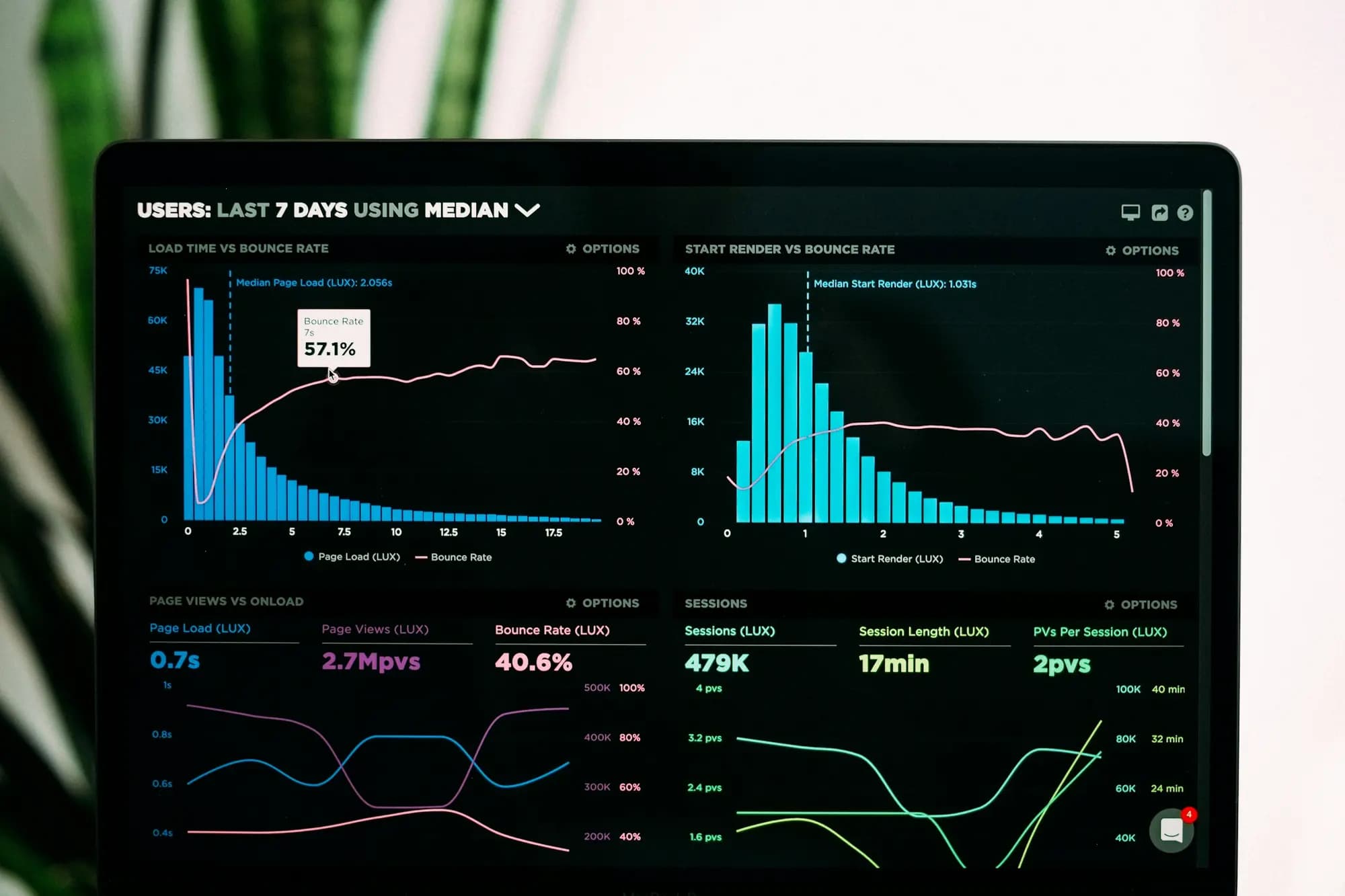
AI, Data & Automation
The challenge
Plenty of data, little usable insight
Reporting often depends on a few people exporting data from several systems and assembling it in spreadsheets. Figures arrive late, definitions differ between departments and nobody fully trusts the numbers. Meanwhile, teams spend hours on repetitive tasks such as keying in invoices, checking forms and copying data between applications.
AI promises to help, but many initiatives stall because the underlying data is incomplete, the use case is vague or the risks are not managed. In markets where data infrastructure is still maturing, as in much of Africa, the foundation matters even more: integration and data quality come before any model.
- Management reports compiled manually and delivered days after period end
- Conflicting figures for the same metric across finance, sales and operations
- Staff time consumed by data entry from invoices, forms and scanned documents
- Forecasts based on intuition because historical data is hard to access
- AI pilots that never reach production or lack clear accountability
Capabilities
What we design and build in this domain.
Data integration
Pipelines that extract, clean and consolidate data from ERP, CRM, payment, logistics and legacy systems into a governed central store.
Business intelligence
Dashboards and self-service reporting on agreed metric definitions, so every team reads the same numbers.
Workflow automation
Automated approvals, notifications, data transfers and routine back-office tasks, with exception handling and full traceability.
Predictive analytics
Demand forecasting, churn indicators, credit risk signals and maintenance predictions, validated against historical data before use.
Intelligent document processing
Extraction of data from invoices, receipts, identity documents and forms, with confidence scores and human validation where needed.
AI-assisted operations
Assistants that help teams search internal knowledge, draft responses or summarise cases, grounded in your own approved content.
Data governance
Data catalogues, ownership, quality rules, lineage and access policies that make data dependable and compliant.
Human oversight and responsible AI
Review queues, explainability, bias checks and monitoring, so people remain accountable for decisions that affect customers and staff.
Example use cases
Illustrative examples of how these capabilities can be applied.
- 01 · Leadership and finance teams
Executive reporting for a group
A multi-entity group could consolidate sales, cash and operational data from several systems into daily dashboards with agreed definitions, replacing manually assembled monthly packs.
- 02 · Accounts payable teams
Invoice and receipt processing
A finance team could capture supplier invoices by email or scan, extract amounts and references automatically and focus on validating only the documents the system is unsure about.
- 03 · Retailers and distributors
Demand forecasting for replenishment
A distributor could forecast product demand by site using sales history and seasonality, giving buyers suggested order quantities they can review and adjust.
- 04 · Customer service and operations
Knowledge assistant for support teams
A support team could query policies, procedures and product information through an assistant that cites its sources and escalates when it lacks a reliable answer.
Technical approach
How we deliver data and AI responsibly
We treat AI as one tool among several. Many problems are best solved with clean data and simple automation; where machine learning adds value, we deploy it with clear limits and accountability.
- 01
Frame the decision
We start from a specific decision or task, define what a good outcome looks like and confirm that the necessary data exists and may be used.
- 02
Build the data foundation
We integrate sources, model the data, apply quality checks and document lineage, so every downstream report or model rests on solid ground.
- 03
Automate and model incrementally
We deliver rule-based automation first where it suffices, then introduce models evaluated against baselines and real-world test sets.
- 04
Keep humans in the loop
We define where people review, override or approve outputs, monitor performance and drift in production, and retrain or roll back when needed.
Technologies & practices
- ELT pipelines
- Data warehousing
- dbt-style data modelling
- Workflow orchestration
- Python
- OCR and document AI
- Large language models with retrieval
- Model monitoring
- BI and dashboarding tools
Security & scalability
Governance, privacy and scale
Data and AI systems amplify both value and risk. We design them so sensitive data stays protected, outputs remain explainable and workloads scale predictably.
Access by purpose
Data access is granted by role and purpose, with sensitive fields masked or pseudonymised in analytics environments.
Controlled use of AI models
We assess where data is processed, prevent confidential data from being used to train third-party models and prefer providers with clear data handling terms.
Traceable outputs
Predictions, extractions and generated content are logged with inputs and model versions, so any result can be reviewed and explained.
Guardrails and evaluation
Automated tests, content filters and regular evaluations detect quality degradation, bias and inappropriate outputs before they reach users.
Elastic processing
Pipelines and inference services scale with data volumes and are scheduled to control infrastructure costs.
Frequently asked questions
Where should we start with business automation or AI?
Start with a frequent, well-understood task where errors or delays are costly, such as invoice processing or management reporting. It is usually best to fix data access and quality first, then automate, and only then add machine learning where it clearly improves the result.
Does AI replace our staff’s decisions?
Not in the systems we design. AI suggests, extracts or prioritises; people remain responsible for decisions that affect customers, employees or finances, with clear review and override mechanisms.
Is our data safe when using large language models?
We design solutions so that confidential data is processed under appropriate agreements, is not used to train third-party models and is restricted to authorised users. Where requirements are strict, self-hosted or regionally hosted models can be considered.
Can you work with data from legacy systems and spreadsheets?
Yes. Integrating legacy databases, file exports and spreadsheets is often the first step. We build pipelines that clean and standardise this data so it can be used reliably.
Related solutions
Cloud & Software Engineering
End-to-end engineering of web, mobile and API platforms on cloud-native foundations, with the practices that keep them reliable.
Learn moreERP & Business Systems
Custom ERP and business systems that connect procurement, inventory, finance and HR into one controlled, auditable flow.
Learn moreSupply Chain & Logistics
Transportation, warehouse and delivery systems that give operators one reliable view of goods in motion, from supplier to doorstep.
Learn more

Gombe, Kinshasa, DR CongoPhoto: MONUSCO/Abel Kavanagh — CC BY-SA 2.0
Contact
Let’s discuss your project.
Tell us about your context and constraints — we’ll share how we would approach it.